
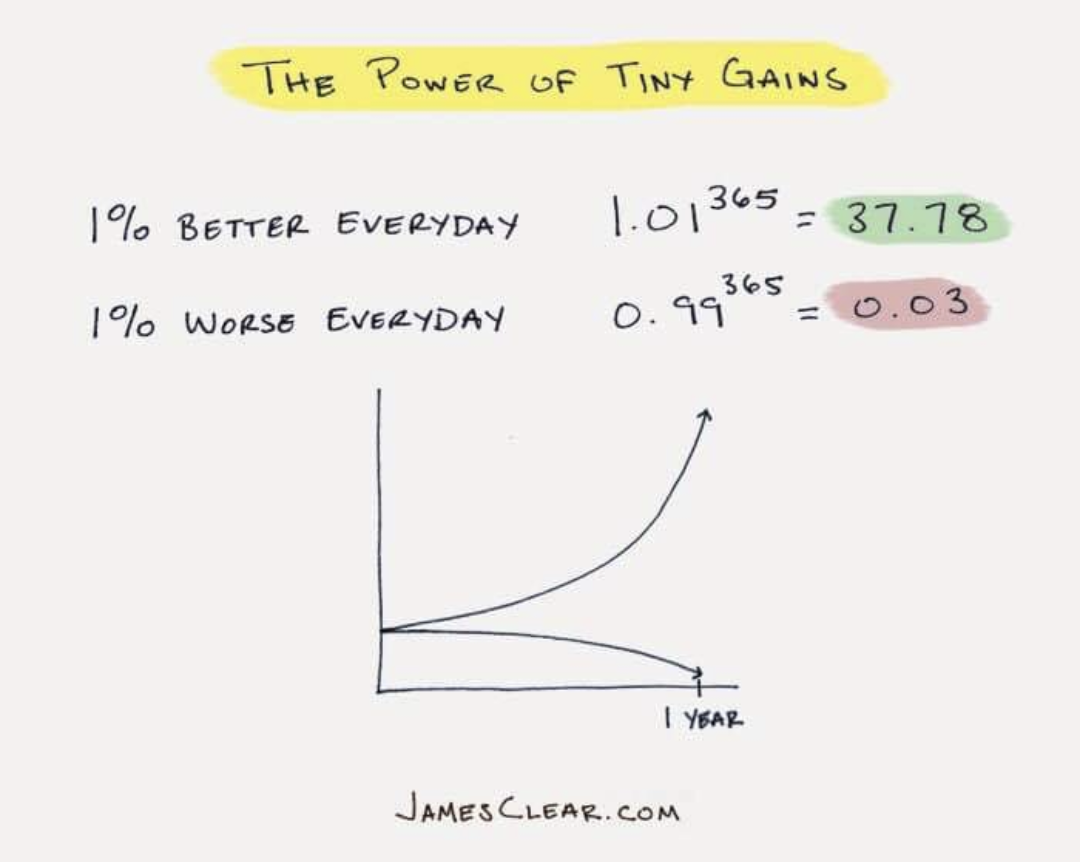
I sure needed to see this today and maybe you did too!
Just a little better daily, makes life remarkably different.
I sure needed to see this today and maybe you did too!
Just a little better daily, makes life remarkably different.

“Man is but the product of his thoughts. What he thinks, he becomes.” These powerful words by Mahatma Gandhi reveals our thoughts’ incredible influence on our lives. This idea applies not only to our personal growth but also to our relationships, academic performance, and even our careers. Lets will delve into thoughts and their impact.
Example 1: Academic Success:
Consider the story of Carla, a high school student who struggled with math. Initially, she
believed she would never excel in the subject, and her negative thoughts only reinforced her poor performance. However, she saw improvement when she changed her mindset and approached math positively. Carla’s newfound confidence in her abilities enabled her to conquer her fear of math and achieve better grades.
Example 2: Athletic Performance
Another example is John, a talented basketball player with the skill and potential to become a star athlete. However, his self-doubt and negative thoughts prevented him from reaching his full potential. His performance improved dramatically when John started to believe in himself and visualize his success on the court. As he embraced a positive mindset, he became a leading player on his team and eventually earned a college scholarship.
Example 3: Entrepreneurial Journey
Lastly, let’s look at the entrepreneurial journey of Sarah, who started her own business. In the beginning, Sarah encountered numerous setbacks and challenges. However, she didn’t let her negative thoughts get in the way of her goals. Instead, she maintained a positive outlook, learned from her mistakes, and persevered. Her unwavering belief in her vision helped her business thrive and succeed.
Our thoughts profoundly impact our lives, shaping our beliefs, attitudes, emotions, and actions. We can better transform our lives by embracing positive thinking and harnessing our thoughts’ power. Whether you’re facing academic challenges, athletic pursuits, or personal goals, remember that your thoughts are crucial in your journey. Gandhi wisely said, “Man is but the product of his thoughts. What he thinks, he becomes.” So, think positively, believe in yourself, and you’ll be on your way to becoming the best version of yourself.
A little joke to lighten the mood: Why don’t scientists trust atoms? Because they make up everything! Much like atoms, our thoughts make up the reality we live in, so it’s essential to keep them in check.
A thought for your library:


The Secret contains wisdom from modern-day teachers—men and women who have used it to achieve health, wealth, and happiness. By applying the knowledge of The Secret, they bring to light compelling stories of eradicating disease, acquiring massive wealth, overcoming obstacles, and achieving what many would regard as impossible.
As an Amazon Associate, I earn on qualifying purchases.

By Chuck R. Swindoll
Mend a quarrel
Seek out a forgotten friend
Dismiss suspicion
Hug someone tightly and whisper, “I love you”
Forgive an enemy
Be gentle and patent with an angry person
Express appreciation
Gladden the heart of a child
Find the time to keep a promise
Make or Bake something for someone else- anonymously
Release a grudge
Listen
Speak kindly to a stranger
Enter into another’s sorrow
Smile. Laugh a little. Laugh a little more
Take a walk with a friend
Kneel down and pet a dog
Lessen your demands on others
Play some beautiful music during the evening
Apologize if you were wrong
Turn the television off and talk
Pray for someone who helped you when you were hurt
Fix breakfast on Saturday morning
Give a soft answer even though you feel strongly
Encourage an older person

Next fall, when you see geese heading south for the winter, flying along in “V” formation, you might consider what science has discovered as to why whey they fly that way. As each bird flaps its wings, it creates an uplift for the bird immediately following. By flying in “V” formation, the whole flock adds at least 72 percent greater flying range than if each bird flew on its own.
People who share a common direction and sense of community can get where they are going more quickly and easily because they are traveling on the thrust of one another.
When a goose falls out of formation, it suddenly feels the drag and resistance of trying to go it alone and quickly gets back into formation to take advantage of the lifting power of the bird in front.
If we have as much sense as a goose, we will stay in formation with those people who are headed the same way we are.
When the head goose gets tired, it rotates back in the wing and another goose flies point.
It is sensible to take turns doing demanding jobs, whether with people or with geese flying south.
Geese honk from behind to encourage those up front to keep up their speed.
Finally-and this is important-when a goose gets sick or is wounded and falls out of formation, two other geese fall out with that goose and follow it down to lend help and protection. They stay with the fallen goose until it is able to fly or until it dies; and only then do they launch out on their own, or with another formation to catch up with their group.
If we have the sense of a goose, we will stand by each other like that.



Sometimes, taking the scenic route can be the best decision you ever make. Sure, it may take a bit longer, but the views and experiences you’ll have along the way are worth it.
When we’re in a rush, it’s easy to take the most direct and quickest route to our destination. But if we take a step back and look around, we may find that there are hidden gems and beautiful sights we would have missed if we hadn’t taken the scenic route.
There’s something magical about driving along a winding road, surrounded by mountains, forests, or fields. The fresh air, the sounds of nature, and the peacefulness of the journey can be incredibly refreshing and rejuvenating.
The scenic route is also an opportunity to explore new places and discover hidden treasures. You may stumble upon a quaint little town with a charming main street or a roadside diner with the best pie you’ve ever tasted. These are the kinds of experiences that make memories that last a lifetime.
And let’s not forget about the benefits to our mental health. Taking the scenic route allows us to slow down, breathe deeply, and appreciate the beauty around us. It’s a chance to unplug from our busy lives, even if just for a little while, and to reconnect with ourselves and our surroundings.
So, next time you’re on a road trip or simply running errands around town, consider taking the scenic route. You never know what kind of adventure and beauty awaits you.
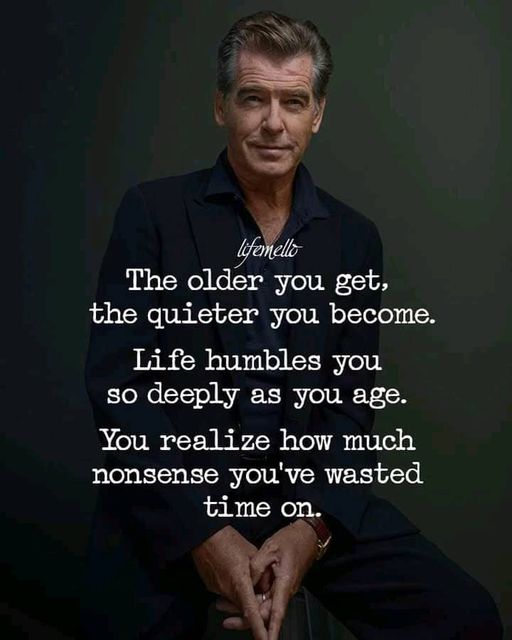
We often learn valuable lessons that shape us into the person we become. One such lesson is the realization that, as we grow older, we tend to become quieter and more introspective. This is because life humbles us deeply and we begin to recognize the value of time and the preciousness of the moments we have.
As we age, we begin to realize how much time we have wasted on meaningless pursuits and how little we have truly appreciated the people and experiences that have shaped us. We begin to recognize the importance of living in the present and cherishing every moment we have because we know that time is fleeting and that we can never get it back.
This realization often leads to a sense of quietude, as we become more contemplative and introspective. We spend less time talking and more time listening, seeking to understand the world around us and our place in it. We become more patient and understanding, recognizing the complexity and beauty of the human experience.
The older we get, the more we realize how much nonsense we have wasted time on. But this realization is not a cause for despair or regret; rather, it is a source of wisdom and growth. It teaches us to live with intention, cherish the moments we have, and appreciate the people and experiences that make life worth living.
So if you find yourself becoming quieter and more introspective as you age, embrace it. Recognize the value of the lessons you have learned and the wisdom you have gained. And above all, cherish the moments you have, because they are the most precious gifts life has to offer.

Many people equate progress with big, bold leaps forward. While these can be exhilarating and impactful, the reality is that progress is often made through a series of small, deliberate steps. This is why forward is not just a direction, it’s a pace that can be achieved even with small steps.
Taking small steps towards a goal may not seem like much, but over time, they can add up to significant progress. For example, if you’re trying to learn a new language, studying for just 10 minutes a day may not seem like much, but over the course of a year, that’s over 60 hours of study time.
Additionally, taking small steps can help us overcome the fear of failure or the feeling of being overwhelmed. When we break down our goals into manageable pieces, we feel more in control and confident in our ability to succeed.
As famous author and motivational speaker Zig Ziglar once said, “You don’t have to be great to start, but you have to start to be great.” This quote perfectly encapsulates the idea that progress is not about achieving perfection, but rather about taking action and moving forward, even if it’s with small steps.
It’s important to note that moving forward at a slow pace does not mean we should be complacent or lack ambition. Rather, it means that we should be intentional with our actions and celebrate the small victories along the way.
Forward is not just a direction, it’s a pace that can be achieved even with small steps. By taking intentional, deliberate actions toward our goals, we can make progress and achieve success over time. So, let’s take that first step forward, no matter how small it may be, and keep moving forward toward our dreams.
 Terry McDaniel