Last month, I bought a gratitude journal with the best intentions. I imagined myself filling its pages daily, reflecting on life’s blessings, and creating a habit of thankfulness. But here I am, weeks later, and I’ve only written in it a handful of times.
Sound familiar?
It’s easy to get caught up in the rush of life. We tell ourselves we’ll start tomorrow, but tomorrow turns into next week, and next week turns into never. That changes today.
The Challenge: Write Every Day
I’m challenging myself—and you—to commit to writing in a gratitude journal every day. It doesn’t have to be long or profound. Just a few sentences about what you’re grateful for. A kind gesture from a friend, a beautiful sunset, a lesson learned—anything that sparks appreciation.
Why Gratitude Matters
Science backs up what we already know: gratitude changes everything. Writing down what you’re grateful for can: ✅ Boost happiness and reduce stress ✅ Shift your focus from what’s missing to what’s abundant ✅ Improve sleep and overall well-being ✅ Strengthen relationships and increase positivity
How to Stick With It
1️⃣ Keep It Simple – No need to overthink. Just jot down 3 things you’re grateful for each day. 2️⃣ Set a Reminder – Link it to a habit you already have, like your morning coffee or bedtime routine. 3️⃣ Be Honest – Some days will be harder than others, but there’s always something to appreciate. 4️⃣ Make It Enjoyable – Use a journal you love, grab a favorite pen, and make it a peaceful moment.
Join Me!
This isn’t just a challenge for me—it’s an invitation to you. Let’s make gratitude a daily habit. If you already have a gratitude journal collecting dust, now’s the time to open it. If you don’t have one, grab any notebook and start today.
Are you in? Let me know in the comments or share what you’re grateful for today. Let’s build a habit that transforms our mindset, one entry at a time. 🌿✨
Valentine’s Day is all about love—but love isn’t just about relationships. It’s also about the joy we cultivate in our daily lives. One of the best ways to add more love and fulfillment to your life is by finding hobbies that bring you happiness, creativity, and a sense of purpose.
Hobbies: A Love Letter to Yourself
Engaging in a hobby is an act of self-care. It allows you to slow down, be present, and find joy in the process rather than just the outcome. Whether it’s gardening, baking bread, reading, or crafting, hobbies fill your days with love in small but meaningful ways.
Gardening – Growing your own plants or food connects you with nature and offers a deep sense of accomplishment. Watching something thrive because of your care is a rewarding experience that mirrors love itself.
Baking & Bread-Making – There’s something special about kneading dough, watching it rise, and enjoying the delicious result. Baking is a beautiful reminder that patience and effort create something truly wonderful.
Reading – Books open up worlds of imagination, inspiration, and knowledge. Whether you get lost in a novel, learn a new skill, or read for relaxation, it’s a way to love yourself through learning and discovery.
Love the Life You Create
This Valentine’s Day, whether you’re celebrating with a partner or enjoying your own company, consider starting a hobby that brings you joy. Life isn’t just about big moments—it’s about the small, everyday passions that make your world brighter.
Filling your life with things you love is one of the best ways to celebrate love itself. So go ahead—plant a seed, bake a loaf, turn a page—and watch love grow in all its forms. 💕
Whether we’re pursuing personal goals, professional aspirations, or even day-to-day tasks, we often find ourselves fixated on the outcome. We focus on the end result, measuring our worth and success by what we achieve. But what if we flipped the script and focused instead on putting in mindful effort while letting go of attachment to the results?
This approach can be a game-changer, not just in how we work, but in how we experience life. It’s a blend of intention and surrender, where we show up fully and give our best, without becoming entangled in expectations about what will come from our efforts.
1. The Power of Mindful Effort
Mindful effort is about being present in the task at hand. It’s the opposite of rushing through tasks on autopilot, distracted by the constant hum of “what’s next?” Instead, it’s about focusing on the current moment and committing to doing something with all your heart. Whether it’s a work project, gardening, or even just folding laundry, mindful effort allows you to immerse yourself in the process and savor the experience of creating, learning, or growing.
This effort isn’t about perfection, but about doing your best in the present. When we focus on the effort itself, we begin to appreciate the journey more than the destination. And that’s when true growth happens—not just in our skills or achievements, but in our ability to enjoy the process, regardless of what the outcome looks like.
2. The Freedom of Letting Go of Attachment to Results
One of the most liberating things you can do is release your attachment to the results. This doesn’t mean you don’t care about your goals or want to achieve great things. It means you recognize that the outcome is often beyond your control. You’ve put in your best effort, now allow yourself to be at peace with whatever unfolds.
When you stop attaching your worth to the result, you open yourself up to more possibilities. You may be surprised at how things turn out, and sometimes, the best results come from unexpected places. In the end, what matters most is not how you arrived at the destination, but how you handled the journey.
3. Balance Between Effort and Detachment
Striking a balance between effort and detachment isn’t always easy. It requires mindfulness and self-awareness. There will be moments when you feel like you’re losing sight of the process and slipping into the habit of focusing too much on the end goal. That’s okay—simply return to the present moment, recalibrate, and remind yourself of your intention to give your best without needing a specific outcome.
One way to practice this is by setting clear intentions for your efforts. Intend to work with focus, dedication, and care, but let go of the need for any specific result. Trust that by being mindful and putting in your best work, the right outcomes will come in their own time.
4. The Benefits of Letting Go
When you start letting go of attachment to outcomes, you may notice a shift in your mindset. You’ll likely experience less stress, fewer feelings of failure, and greater peace of mind. The weight of constant self-judgment begins to lift, and you begin to trust that things will unfold in the way that’s best for you.
You’ll also begin to appreciate the simple act of trying, without putting so much pressure on yourself. With this approach, you learn that it’s not always about achieving a particular result, but about growing in the process. Every effort you make teaches you something valuable, whether you hit the target or not.
Putting in mindful effort while letting go of attachment to results is about learning to live in the moment. It’s about giving your all to the process, knowing that it’s enough, regardless of what comes next. It’s about finding peace in the journey, not just the destination.
By embracing this balance, you’ll not only find more joy in your work and personal pursuits, but you’ll also foster greater resilience, adaptability, and satisfaction. The more you practice this approach, the more you’ll realize that it’s not the results that define you—it’s the effort, the mindset, and the heart you put into every moment.
Optimism isn’t about ignoring reality or pretending everything is perfect. It’s about choosing to focus on solutions rather than problems. It’s about believing that no matter what happens, you have the power to adapt, grow, and find a way forward.
How to Cultivate Relentless Optimism
1. Reframe Challenges as Opportunities
Every setback is a setup for a comeback. Instead of seeing difficulties as roadblocks, view them as stepping stones to growth. Ask yourself: What can I learn from this? How can I turn this into an advantage?
2. Guard Your Mindset
What you feed your mind shapes your perspective. Surround yourself with positive influences—books, podcasts, and people who uplift and inspire you. Avoid negativity that drains your energy and confidence.
3. Take Daily Action
Optimism isn’t just a mindset; it’s a practice. Set goals, take action, and prove to yourself that progress is possible. Even small steps forward reinforce the belief that you’re in control of your destiny.
4. Focus on Gratitude
Gratitude fuels optimism. Take time each day to reflect on what’s going well. Recognizing your blessings shifts your focus from what’s missing to what’s possible.
5. Stay Resilient in the Face of Doubt
Doubt and fear will show up—that’s normal. But relentless optimism means you acknowledge them without letting them stop you. Trust in your ability to figure things out, no matter what.
Relentless optimism isn’t about wishful thinking—it’s about having the courage to keep moving forward, no matter the challenges. When you choose optimism, you empower yourself to live boldly, take risks, and create a life filled with purpose and joy.
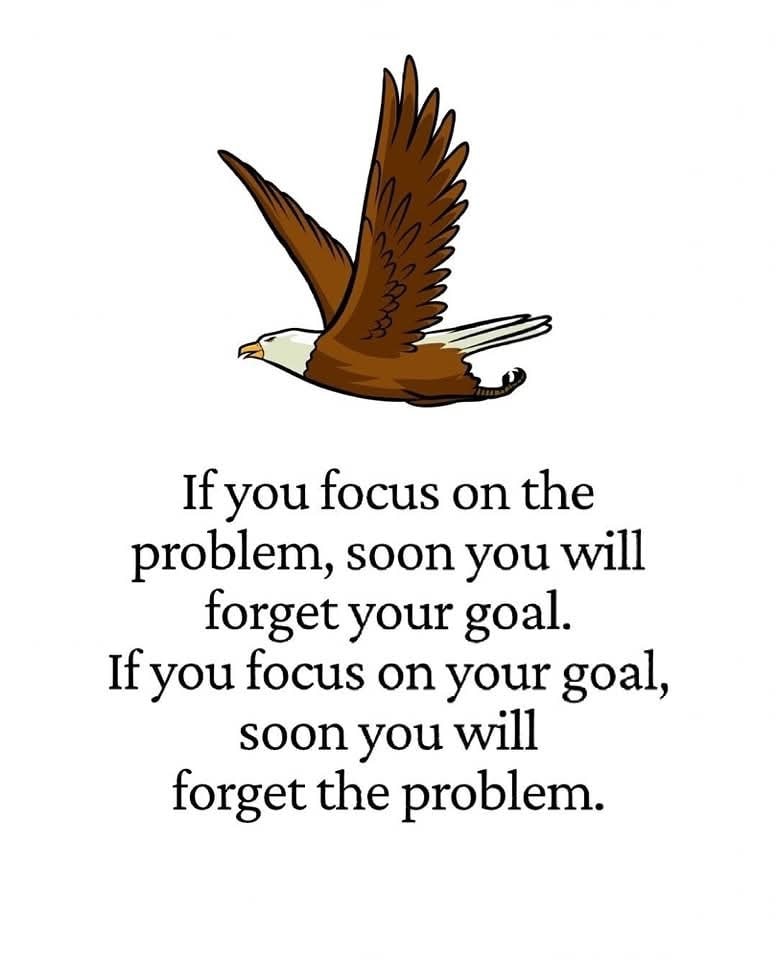
In any journey—whether personal, professional, or entrepreneurial—it’s easy to get caught up in the challenges we face. Problems seem to demand our immediate attention, pulling us into a cycle of frustration and sometimes even paralysis. However, there’s a powerful reminder we can adopt that shifts our perspective and helps us keep moving forward:
“If you focus on the problem, you’ll forget the goal. If you forget the problem, you’ll focus on the goal.”
The Problem with Focusing on the Problem
Problems, big or small, often feel like they demand our undivided attention. Whether it’s an unexpected setback, a difficult situation, or a challenging task, we can easily become consumed by the weight of it all. When we focus too much on the problem, we can lose sight of what really matters: the bigger goal we’re working toward.
This kind of focus can be limiting. We can get stuck in the details of the issue at hand, thinking it’s the only thing we need to fix. It may cause us to feel overwhelmed, stressed, or hopeless—especially when it feels like the problem is insurmountable.
Shifting Focus to the Goal
On the other hand, when we make a conscious effort to shift our focus away from the problem and toward the goal, we can begin to see solutions more clearly. Focusing on the goal brings clarity, inspiration, and motivation. It reminds us why we’re taking on the challenge in the first place and keeps our eyes on the prize.
Think about it: when you focus on the goal, you automatically start thinking about the next steps that can move you toward achieving it, regardless of the obstacles. You’ll notice opportunities that may have been hidden when you were too distracted by the problem. The goal serves as a guiding light, helping you navigate through the storm of setbacks and obstacles.
The Power of Perspective
Changing your perspective from the problem to the goal doesn’t mean ignoring the difficulties you face—it means not letting them define your progress. By remembering the purpose behind what you’re doing, you can work through challenges more effectively and with greater resilience.
Here are a few practical ways to shift your focus:
Reframe the Situation: Instead of saying, “This is a huge problem,” say, “This is a challenge that will help me grow.” This subtle shift can change how you approach the problem.
Set Smaller, Achievable Milestones: Break down your larger goal into smaller, actionable steps. Celebrate the wins along the way to keep the goal in sight and stay motivated.
Stay Solution-Focused: Instead of dwelling on why a problem exists, ask yourself, “What can I do to solve this?” Focusing on solutions helps you feel empowered and proactive.
Visualize the Outcome: Take time to imagine the successful outcome of your goal. Visualizing the rewards will keep you inspired and focused on the end result.
Moving Forward
Remember, problems are a natural part of any process. They are the tests that challenge our commitment to our goals and help us develop the skills needed to achieve them. But by focusing on the goal, rather than being distracted or overwhelmed by the problem, we create a path toward success that is less about struggle and more about growth.
When you encounter obstacles, remind yourself of the end goal and the bigger picture. This shift in focus will not only help you overcome challenges more effectively but will also keep you motivated and moving forward. The key is to never lose sight of why you started in the first place.
So, the next time you face a problem, ask yourself: What is the goal? How can I stay focused on that, regardless of the challenges in front of me?
Everything we do starts with intention—whether we realize it or not. Intention is the force behind our actions, the guide for our decisions, and the foundation of the life we create. When we move through life with intention, we stop drifting and start designing.
1. Intention vs. Reaction
Many people live in reaction mode, letting the day dictate their actions instead of the other way around. Living with intention means deciding in advance what kind of day, career, relationships, and experiences you want. It’s the difference between waiting for life to happen and making it happen.
2. Setting Intentions Shapes Reality
When you set a clear intention, your focus sharpens. Your mind starts looking for ways to align your actions with your goals. Whether it’s improving health, deepening relationships, or achieving success, setting an intention each day helps direct your energy toward what matters most.
3. Small Intentions Create Big Change
Living with intention doesn’t mean making drastic changes overnight. It’s about small, consistent choices:
Before a meeting → Intend to listen actively.
Before a workout → Intend to push past your limits.
Before starting your day → Intend to approach challenges with patience.
These small moments, when lived intentionally, add up to a purposeful life.
4. Aligning Actions with Intentions
A powerful intention without action is just a wish. If you intend to be more present with loved ones, put down your phone. If you intend to grow in your career, take the initiative. Intentions guide you, but actions bring them to life.
5. Your Life is a Reflection of Your Intentions
Think about the life you want. Now, think about the intentions you set daily. Are they aligned? If not, start today. Wake up with purpose, move with conviction, and live with intention—because the life you create is the result of the choices you make.
Keeping a journal is more than just a way to record events; it’s a powerful tool for self-reflection, creativity, and personal growth. Whether you’re jotting down your thoughts at the end of a busy day or documenting your dreams and goals, journaling can help you clarify your mind and gain a deeper understanding of yourself. Here’s why you should start a journaling habit today.
1. Clarify Your Thoughts and Emotions
Life moves fast, and it’s easy to feel overwhelmed by the constant flow of information. Writing in a journal gives you the space to slow down and organize your thoughts. When you’re feeling anxious or unsure, putting pen to paper can help you process your emotions, making it easier to navigate your challenges. By journaling, you can gain clarity on what matters most and move forward with confidence.
2. Boost Your Creativity
Journaling is also a fantastic outlet for creativity. Whether you’re a writer, artist, or someone who simply loves to brainstorm, journaling can unlock your imagination. The act of writing every day helps you tap into your inner thoughts and ideas, giving you the freedom to explore new concepts without judgment. It can even become the birthplace of your next big project or passion.
3. Reflect on Personal Growth
As you look back at old journal entries, you’ll be amazed at how far you’ve come. A journal acts as a personal record of your journey, capturing milestones, struggles, and triumphs. It allows you to track your progress over time, making it easier to see how you’ve evolved and what you’ve learned along the way. The process of reflection can be empowering and encouraging, helping you set your sights on future goals.
4. Set and Achieve Your Goals
Writing down your goals in a journal increases the likelihood of achieving them. Whether you’re setting short-term or long-term objectives, journaling helps you map out a clear path for success. By breaking down your goals into manageable steps, you can create a sense of accountability for yourself. And when you achieve those goals, there’s no better feeling than crossing them off your list.
5. Cultivate Gratitude
A gratitude journal is a powerful practice that can shift your mindset toward positivity. By focusing on the things you’re grateful for, you can train your brain to look for the good in every situation. Taking a few minutes each day to note your blessings can boost your mood and increase feelings of contentment and joy.
Tips for Starting Your Journal
Be Consistent: Try to journal at the same time each day, even if it’s just for five minutes. Consistency helps build the habit.
Keep It Simple: Your journal doesn’t need to be perfect. Write whatever comes to mind without worrying about grammar or structure.
Use Prompts: If you’re stuck, journal prompts can spark your creativity. Ask yourself, “What made me happy today?” or “What challenges did I face, and how did I overcome them?”
Be Honest: Your journal is your safe space. Don’t be afraid to be real and honest with yourself.
Whether you’re looking to reflect, relax, or enhance your creativity, journaling offers countless benefits. It’s a simple yet transformative practice that can help you find clarity, set goals, and create the life you want.
In today’s fast-paced world, the ability to learn and grow is more important than ever. No matter where you are in life or how much you already know, there is always something new to discover. Learning doesn’t stop when we graduate from school or when we reach a certain age—it’s a lifelong journey. Embracing learning, regardless of your stage in life, opens the door to new experiences, opportunities, and personal growth.
The Timeless Nature of Learning
Learning isn’t confined to classrooms or textbooks. It happens every day, in all aspects of our lives. The world is full of opportunities to gain new insights, sharpen skills, and explore different perspectives. Whether you are reading a book, engaging in a conversation, or stepping outside of your comfort zone to try something new, each moment holds the potential to teach you something valuable.
One of the most powerful lessons in life is realizing that learning doesn’t just happen when you’re taught—it happens when you are open to absorbing new ideas, new ways of thinking, and new ways of being.
1. Reading: The Gateway to Knowledge
Books have long been one of the most powerful tools for learning. Whether it’s fiction that allows you to see the world through someone else’s eyes or nonfiction that equips you with new skills or knowledge, reading can expand your horizons like few other activities. Each book you read introduces you to new concepts, different cultures, and valuable insights that help shape your understanding of the world.
Reading also has the power to inspire, motivate, and challenge you. The more you read, the more you realize how vast the world is and how much there is to learn. It’s not just about accumulating knowledge, but about broadening your thinking and fostering personal growth.
2. Engaging in Conversations: Expanding Your Perspective
We often think of learning as something that only happens when we read, listen to lectures, or take courses. But one of the richest sources of learning comes from engaging in conversations with others. Every person you meet has a unique perspective shaped by their experiences, culture, and values. By actively listening and being open to these viewpoints, you can learn a great deal about the world and yourself.
Engaging in thoughtful, respectful conversations with people who hold different beliefs or perspectives helps you challenge your assumptions and refine your own ideas. It encourages growth by pushing you to see things from a different angle. The act of asking questions and being genuinely curious about someone else’s life and thoughts fosters both empathy and knowledge.
3. Stepping Outside Your Comfort Zone: Trying New Things
Sometimes, the most powerful form of learning happens when we step outside of our comfort zones and try something completely new. Whether it’s taking on a new hobby, traveling to a new place, or trying a different career path, putting yourself in unfamiliar situations challenges you in ways that textbook knowledge never will.
Learning through experience allows you to grow in confidence and resilience. It helps you become more adaptable and open-minded because it forces you to navigate uncertainty and figure things out along the way. It’s in these moments of challenge and growth that we often learn the most about ourselves, our strengths, and our capacity to learn and evolve.
4. The Growth Mindset: A Key to Lifelong Learning
At the heart of embracing learning is adopting a growth mindset. This concept, popularized by psychologist Carol Dweck, refers to the belief that our abilities and intelligence are not fixed; instead, they can be developed through dedication, effort, and a willingness to learn. A growth mindset encourages curiosity and persistence in the face of challenges, rather than viewing mistakes or setbacks as signs of failure.
When we cultivate a growth mindset, we view learning as a lifelong process—one that doesn’t end with a diploma or an achievement. Every experience is an opportunity to grow, every challenge is a chance to learn something new, and every setback is simply part of the journey toward mastery.
5. Learning from Mistakes: The Path to Wisdom
Mistakes are a natural part of the learning process. In fact, some of our most profound lessons come from our failures. When we make a mistake, it’s easy to become discouraged or frustrated, but the key is to embrace the learning that comes with it. Each mistake offers valuable insights that we can apply moving forward.
The ability to learn from our mistakes—and to see them as opportunities for growth—requires resilience and humility. It’s about embracing imperfection and understanding that we are all continuously evolving.
Why Embrace Learning?
Learning is essential not just for professional development but for personal fulfillment and happiness. When we embrace learning, we keep our minds sharp, our hearts open, and our curiosity alive. We become more adaptable, more creative, and more confident in facing life’s challenges. Learning fosters a sense of accomplishment and purpose, helping us to feel that we are constantly evolving and growing into the best version of ourselves.
In addition, learning keeps us connected with others. It encourages empathy, fosters communication, and builds stronger relationships. When we approach the world with an open mind and a thirst for knowledge, we naturally attract others who share a similar passion for growth and exploration.
Keep Learning, Keep Growing
Embracing learning is about more than just acquiring knowledge—it’s about staying open to new experiences, new ideas, and new perspectives. The world is full of opportunities to learn, no matter how old you are or how much you already know. Whether it’s through reading, engaging with others, or stepping outside of your comfort zone, each moment holds the potential to teach you something valuable.
By adopting an open mind and a growth mindset, you empower yourself to embrace learning in every aspect of your life. So, keep your curiosity alive, never stop exploring, and continue to grow. The journey of learning is never over—and it’s one of the most exciting and fulfilling journeys you can take.
Change is one of the few constants in life. Whether it’s a major life overhaul or a small shift in perspective, change is essential to growth, development, and happiness. But it’s not always easy, especially when it comes to making changes within yourself. Yet, it’s often the very courage to make a change—no matter how big or small—that can lead to powerful transformations.
The Power of Small Changes
Many people think that change needs to be big to be impactful, but the truth is, even the smallest shifts can have profound effects. Maybe it’s waking up ten minutes earlier to start your day with a moment of mindfulness or deciding to speak up in a meeting when you usually stay silent. These small changes can create ripples of growth that extend far beyond their initial scope.
Small changes also provide you with the confidence to tackle bigger ones. When you start with one little adjustment, you begin to build a new mindset—a mindset that believes change is possible.
Making Big Changes: Stepping Outside Your Comfort Zone
On the other hand, big changes are sometimes necessary to achieve the life you truly desire. This could be anything from switching careers, starting a new relationship, or even moving to a new city. Making these major life decisions takes a lot of courage because they challenge your established norms, comfort zones, and routines.
The key is to recognize that change doesn’t happen overnight. It’s a process that requires patience, resilience, and trust. As you make bigger changes, it’s crucial to be compassionate with yourself. You may stumble, feel uncertain, or experience setbacks—but that’s all part of the journey.
Finding Courage to Change
So, what does it take to find the courage to change? Here are some steps to guide you:
Identify the Need for Change: Reflect on your life and your habits. Is there something holding you back or making you feel unfulfilled? Recognizing that a change is necessary is the first step toward making it happen.
Embrace the Fear: Fear is a natural part of change. Instead of trying to avoid it, embrace it. It’s a sign that you’re stepping outside your comfort zone and growing.
Break It Down: Whether the change is big or small, breaking it down into manageable steps can make it seem less overwhelming. Start with small actions and gradually move toward bigger changes.
Build a Support System: Surround yourself with people who believe in you and your ability to change. They can offer encouragement, advice, and perspective as you go through the process.
Commit to the Process: Change doesn’t happen overnight, so commit to the journey. Be patient with yourself, stay consistent, and keep moving forward.
The Benefits of Change
Making changes in your life brings numerous benefits, both short-term and long-term. It encourages personal growth, builds confidence, and creates a sense of accomplishment. As you change, you start to see life from different angles, gain new perspectives, and experience a deeper level of fulfillment.
Even the smallest change can provide a boost of energy and optimism. By taking those small steps, you build the momentum to continue improving and evolving. The courage to change—big or small—opens up opportunities for happiness, success, and fulfillment.
Whether you’re contemplating a major life decision or just looking to tweak an aspect of your day-to-day routine, know that you have the power to make the change. It all starts with one brave decision, one small action, and the courage to see it through. Embrace change, and watch as it transforms your life in ways you never imagined possible.
Change is hard, but it’s also one of the most rewarding things you can do for yourself. The courage to change, no matter how big or small, can lead to a life you truly love. So take that first step—your future self will thank you for it.
The word epic evokes grandiosity, adventure, and awe-inspiring feats. It’s often associated with legendary tales, heroic journeys, and cinematic moments that leave you breathless. But what if we told you that epic isn’t just reserved for mythical legends or blockbuster movies? What if epic could describe your everyday life?
What Does Epic Really Mean?
At its core, epic signifies something remarkable, extraordinary, and larger than life. It’s a word that inspires visions of grandeur and calls you to step beyond the ordinary.
But here’s the secret: You don’t need to climb Mount Everest or write a best-selling novel to have an epic life. Being epic is about how you approach the world—with purpose, passion, and a willingness to create moments that matter.
Making Life Epic
How can you bring epic into your everyday? It’s simpler than you might think:
Define Your Adventure Epic doesn’t look the same for everyone. For some, it might be traveling the globe, while for others, it could be starting a garden, writing a story, or learning a new skill. Ask yourself: What excites me? What challenges me? Then, chase those pursuits unapologetically.
Take Bold Steps Epic requires action. It’s about taking risks and stepping out of your comfort zone. Start that project you’ve been dreaming about, have the difficult conversation, or say yes to an opportunity that scares you.
Celebrate the Small Wins Not every epic moment involves fireworks. Sometimes, it’s the quiet moments of perseverance, growth, and kindness that leave a lasting mark. Celebrate your small wins as much as the big ones—they all add up to your epic story.
Live with Gratitude Seeing life as epic means recognizing the beauty and significance in the little things—a sunrise, a heartfelt conversation, or the satisfaction of completing a goal. Gratitude shifts your mindset and makes even the mundane feel extraordinary.
Why Being Epic Matters
Choosing to live an epic life isn’t about impressing others. It’s about embracing the fullness of life, finding joy in your journey, and leaving a legacy of moments that you’re proud of. Every choice you make has the potential to turn your life into an epic tale.
Your Epic Journey Starts Now
So, the next time you hear the word epic, remember this: You have the power to make your life extraordinary. All it takes is a little courage, a lot of passion, and the willingness to turn the ordinary into the extraordinary.














 Terry McDaniel